
Emergency Pantry Checklist: What to Keep on the Shelf
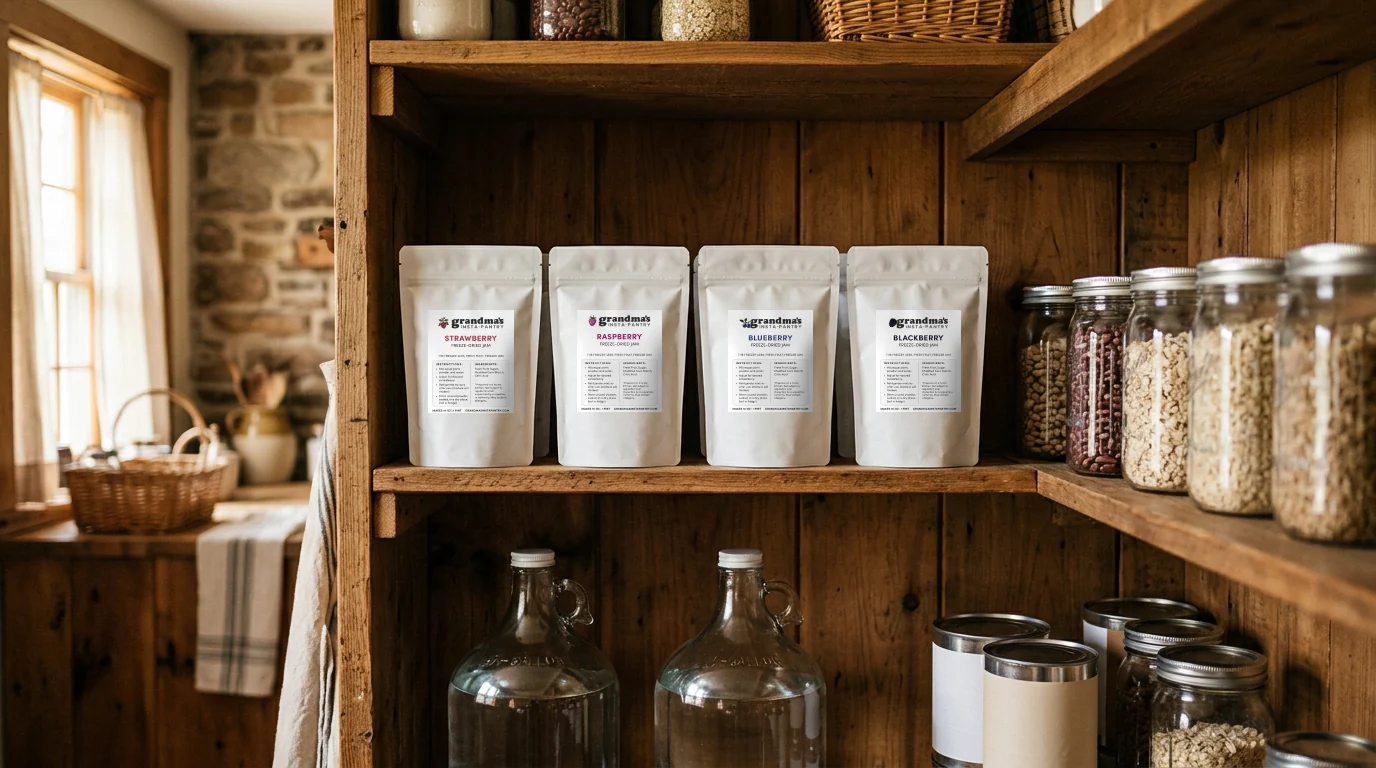
The power goes out for three days. Someone gets sick and nobody wants to go to the store. A paycheck runs late. A storm closes the road.
Different reasons, same fix. A pantry that's stocked and ready.
This list covers the basics. What to stock, how much, where to keep it, and how to keep it fresh so you're not tossing expired cans every spring. Want the short version for the pantry door? Download the printable checklist.
Start Small
Ready.gov recommends at least a several-day supply of food that doesn't need the fridge. Start with three days for everyone in the house. The American Red Cross recommends two weeks of food at home, so once the three days are on the shelf, work toward that.
You don't have to buy it all at once. Grab a few extra things every time you shop and it adds up fast.
Water Needs
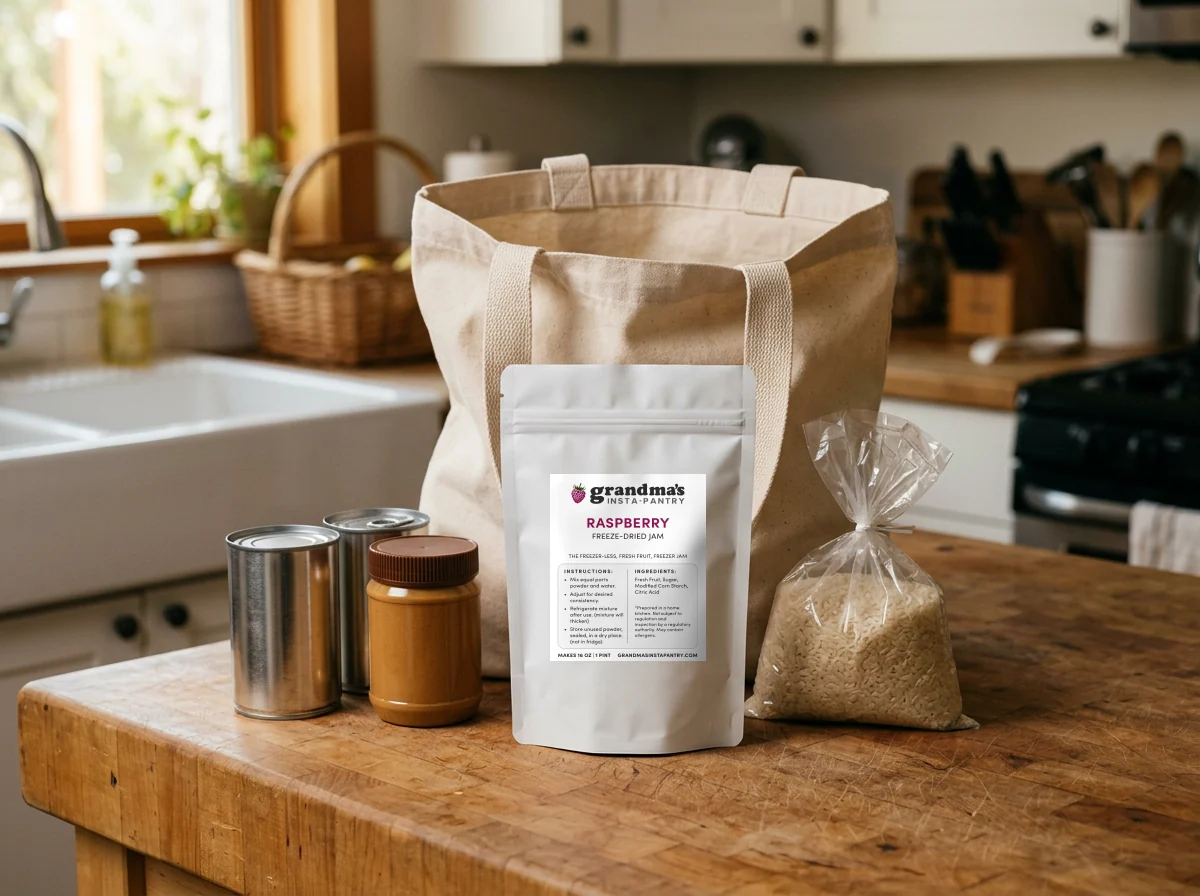
Ready.gov recommends one gallon per person, per day, for several days. That covers drinking and basic washing up. For a family of four, three days comes to 12 gallons. The Red Cross suggests keeping two weeks of water at home, too.
Two things people forget. Pets need water too. And if your water comes from a well with an electric pump, no power means no water.
What to Stock
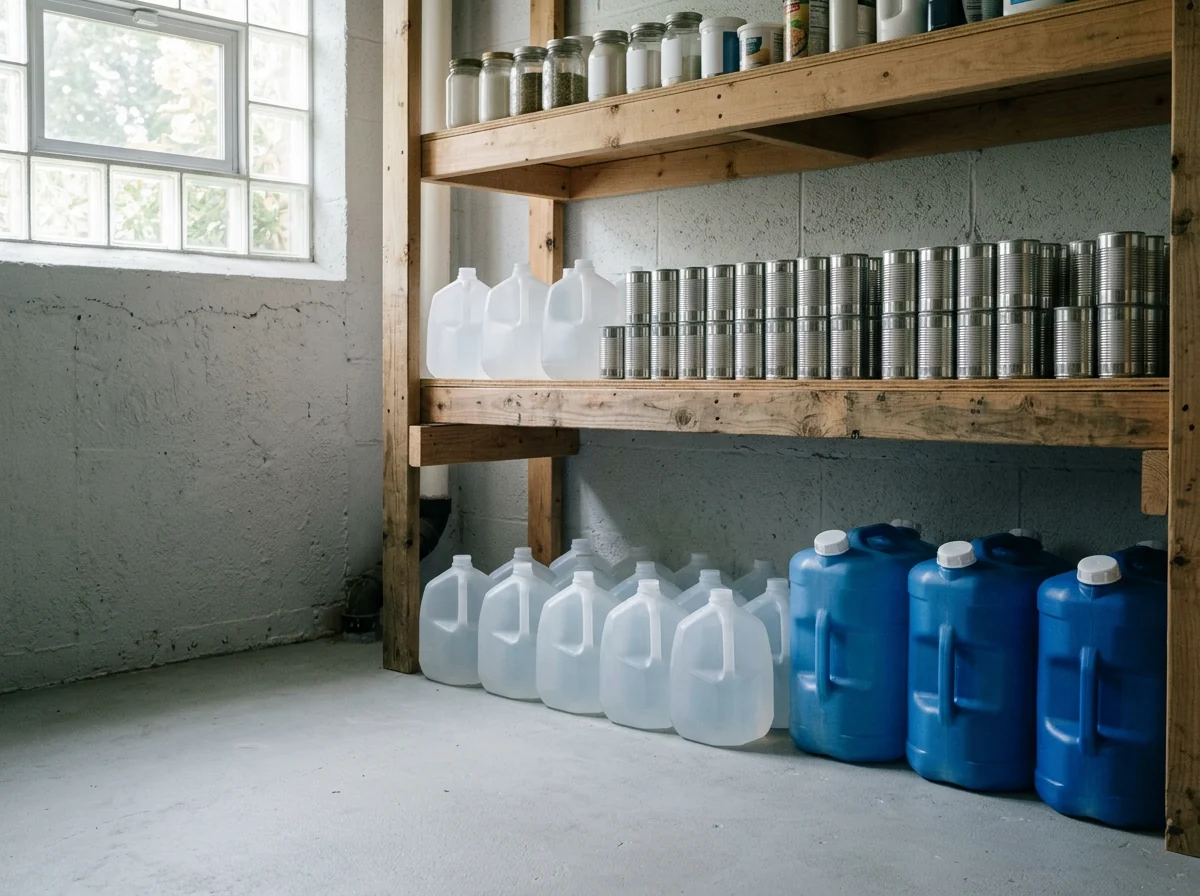
Keep part of the pantry ready to eat with no cooking and no water. If the power or water goes out, that's what you'll reach for first.
Freeze-dried Foods
Freeze-dried food is a prepper favorite for a reason. Freeze-drying pulls the water out of food while it's frozen. What's left is light, needs no fridge, and holds up for a long time while the package stays sealed. Add water and it comes back. Some of it, like fruit, you can eat right out of the bag.
It packs a lot of food into a small space, so it's a smart place to start if your pantry is tight. Shelf life varies by food and brand, so check the package.
One catch: most freeze-dried food needs water to come back. Count that when you figure out how much water to store. Jam is easy on water. A spoonful of powder takes a spoonful of water.
Fruit
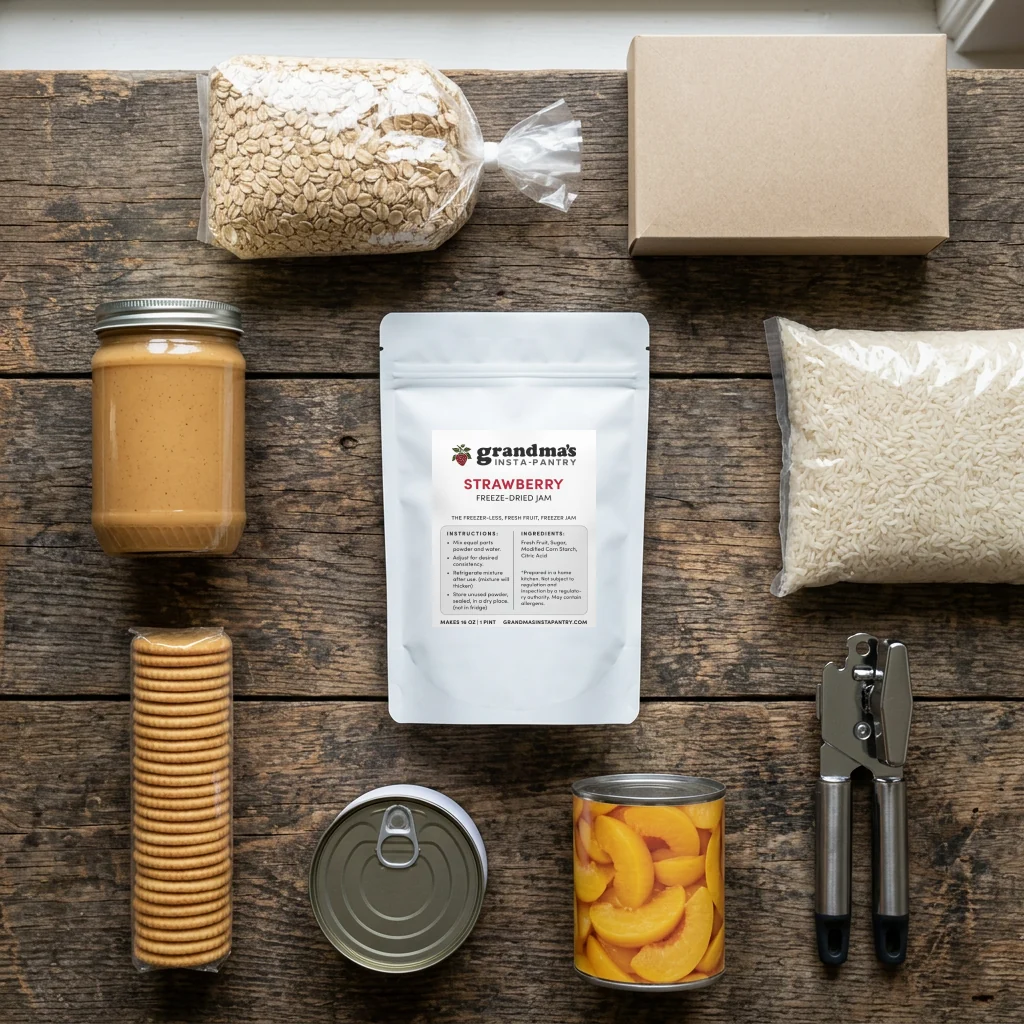
- Freeze-dried jam. Ours is REAL fruit, and a sealed bag keeps up to 25 years. Mix it with water for toast, crackers, oatmeal, or pancakes. Shop all flavors
- Freeze-dried strawberries, apples, bananas, and blueberries. Eat them dry or stir them into oatmeal.
- Canned peaches, pears, and pineapple
- Applesauce cups
- Canned juice
- Raisins and dried cranberries
Vegetables
- Freeze-dried corn, peas, and green beans for soups and rice
- Canned green beans, corn, carrots, and diced tomatoes
- Instant mashed potatoes
Protein
- Freeze-dried chicken and ground beef. Most are sold fully cooked, so check the bag and add water.
- Canned meats: tuna, chicken, salmon, and ham
- Canned black, pinto, and kidney beans, plus dried beans and lentils
- Peanut butter, almonds, and sunflower seeds
- Protein bars
Dairy and eggs
- Powdered milk or shelf-stable boxed milk
- Freeze-dried cheese
- Powdered eggs for baking and breakfast
Grains
- Rolled oats and instant oatmeal
- White rice. It keeps longer than brown rice, which has oils that go stale.
- Pasta and a couple of shelf-stable sauces
- Dry cereal, crackers, and granola bars
- Flour and pancake mix
Ready-made meals
- Freeze-dried meals in pouches, the backpacking kind. Add hot water and eat from the bag.
- Canned soup, chili, and stew
The basics
- Salt, pepper, sugar, honey, and cooking oil
- Bouillon cubes
- Coffee, tea, and cocoa mix
- A manual can opener
- Paper plates, cups, and utensils
Don't forget
- Baby formula and baby food, if you have little ones. Ready.gov suggests ready-to-feed formula so you don't need water to mix it.
- Pet food
- Food for any special diets in the house, like gluten-free or low-sugar
Buy the Food you Like
An emergency is a bad time to find out nobody likes canned chili. Stock the stuff your family eats normally. Then you'll use it, and nothing sits long enough to go bad.
Rotate
New cans go in the back. Old cans move to the front. Write the purchase date on the lid with a marker so you don't have to squint at the label.
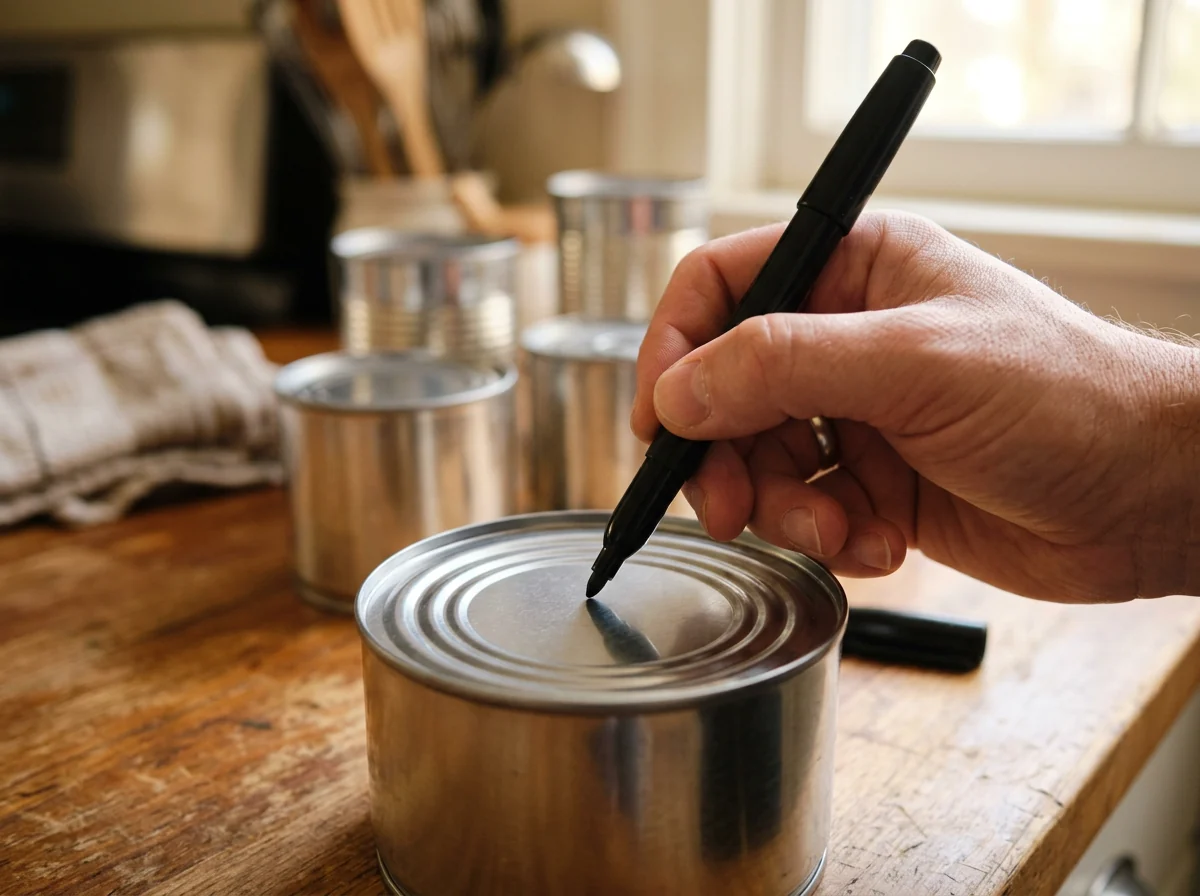
Check the whole pantry twice a year. Pick two dates you'll remember, like when the clocks change. Eat what's getting old and replace it.
Most canned food keeps a long time. The USDA says low-acid canned food like meat, beans, and vegetables keeps its best quality for 2 to 5 years. High-acid food like fruit and tomatoes is closer to 12 to 18 months. So the canned peaches need to rotate faster than the canned chicken.
How to Store it
Cool, dry, and dark. Heat shortens shelf life. Skip the cupboard over the stove and the garage that swings from freezing to 90 degrees.
- Keep it off the floor
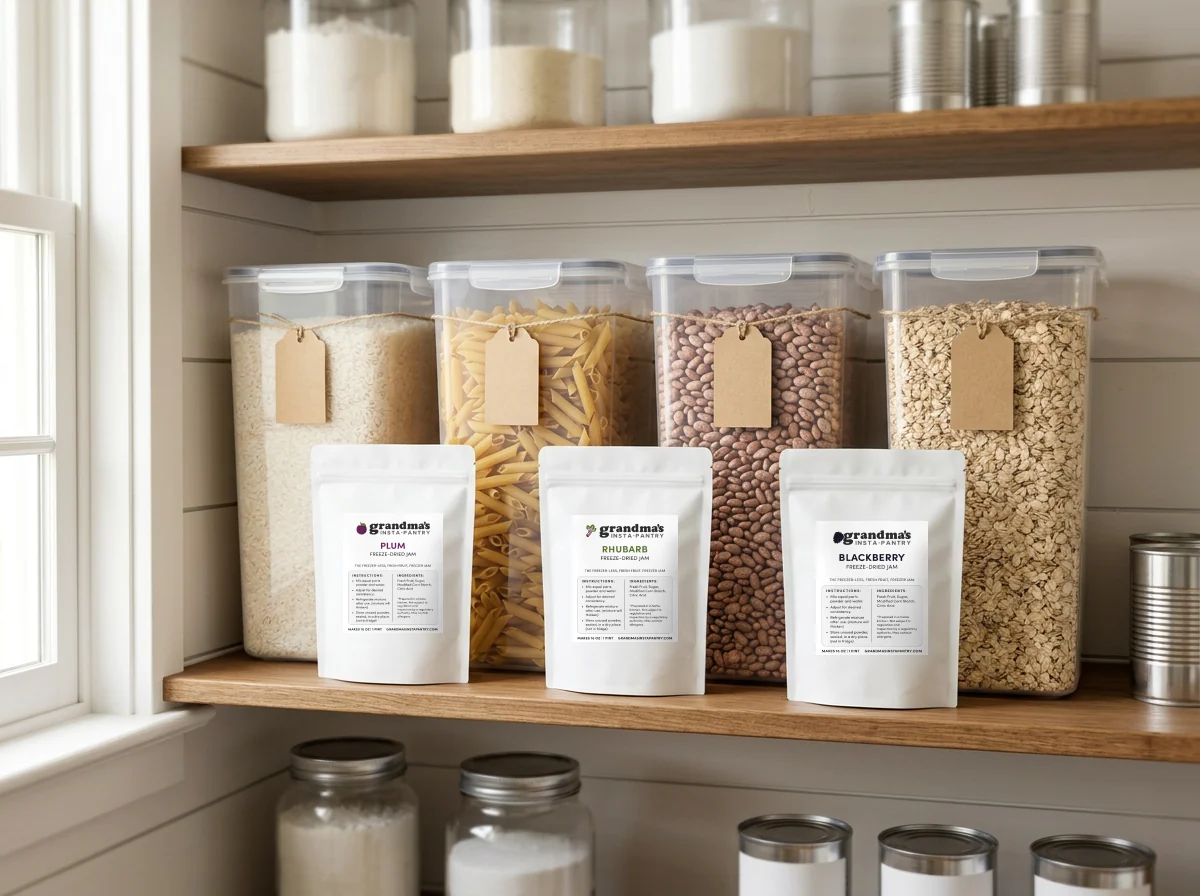
- Move opened bags into airtight containers to keep bugs and mice out
- Seal opened freeze-dried food tight. It pulls moisture out of the air and gets soft.
- Throw out any can that's bulging, leaking, rusted, or badly dented
Power Outage and your Fridge & Freezer
According to the USDA, a closed fridge keeps food safely cold for about 4 hours. A full freezer holds its temperature for about 48 hours, or about 24 if it's half full. Keep the doors shut.
Eat from the fridge first, then the freezer, then the pantry. Got freezer jam in there? Here's how it compares to freeze-dried.
If you want hot food, a camp stove with extra fuel will heat water for oatmeal, coffee, and soup. Use it outside. Camp stoves and grills put off carbon monoxide and don't belong in the house or the garage.
Something that tastes like normal
This is the one people skip, and it matters more than you'd think. Coffee. Cocoa. The snack your kids always ask for. When the week is hard, food that tastes like normal helps.
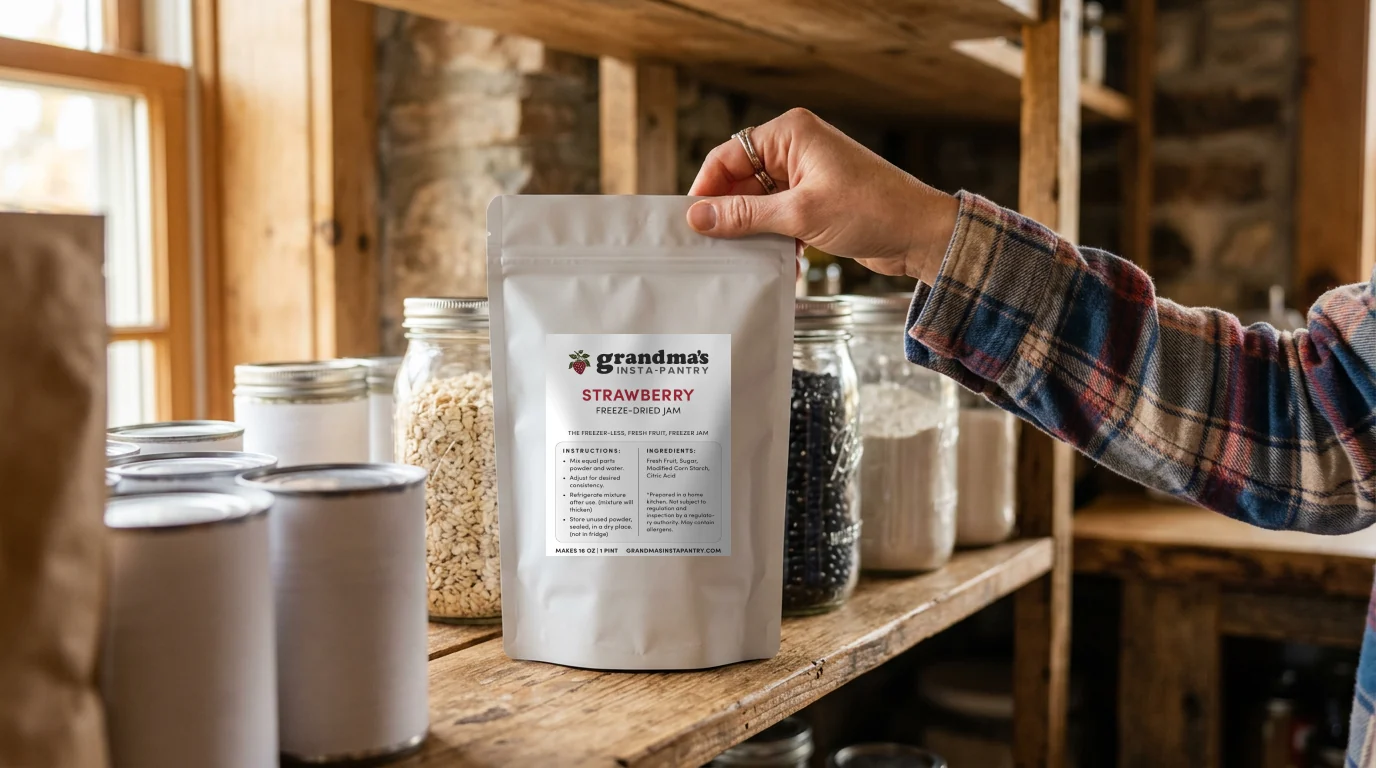
Jam is on our list, for obvious reasons. A sealed bag of our freeze-dried jam keeps up to 25 years with no fridge and no freezer. Freeze-drying keeps the nutrition from the fruit, too. Stir a spoonful with water and you've got jam for the peanut butter and crackers. Mix only what you'll eat, so nothing has to stay cold.
It's Grandma's freezer jam recipe, ready to mix with water. Strawberry and Raspberry are the classics. Can't pick? The Sample Pack is three cups of your choice.
The list:
- Water: one gallon per person, per day
- Freeze-dried jam and fruit
- Freeze-dried vegetables, meat, and meals
- Canned meat, beans, fruit, and vegetables
- Peanut butter, nuts, and protein bars
- Oats, white rice, pasta, cereal, and crackers
- Powdered milk and powdered eggs
- Salt, sugar, oil, coffee, and tea
- Baby food and pet food, if you need them
- Manual can opener and paper plates
- Airtight containers and a marker for dates
- A few comfort foods
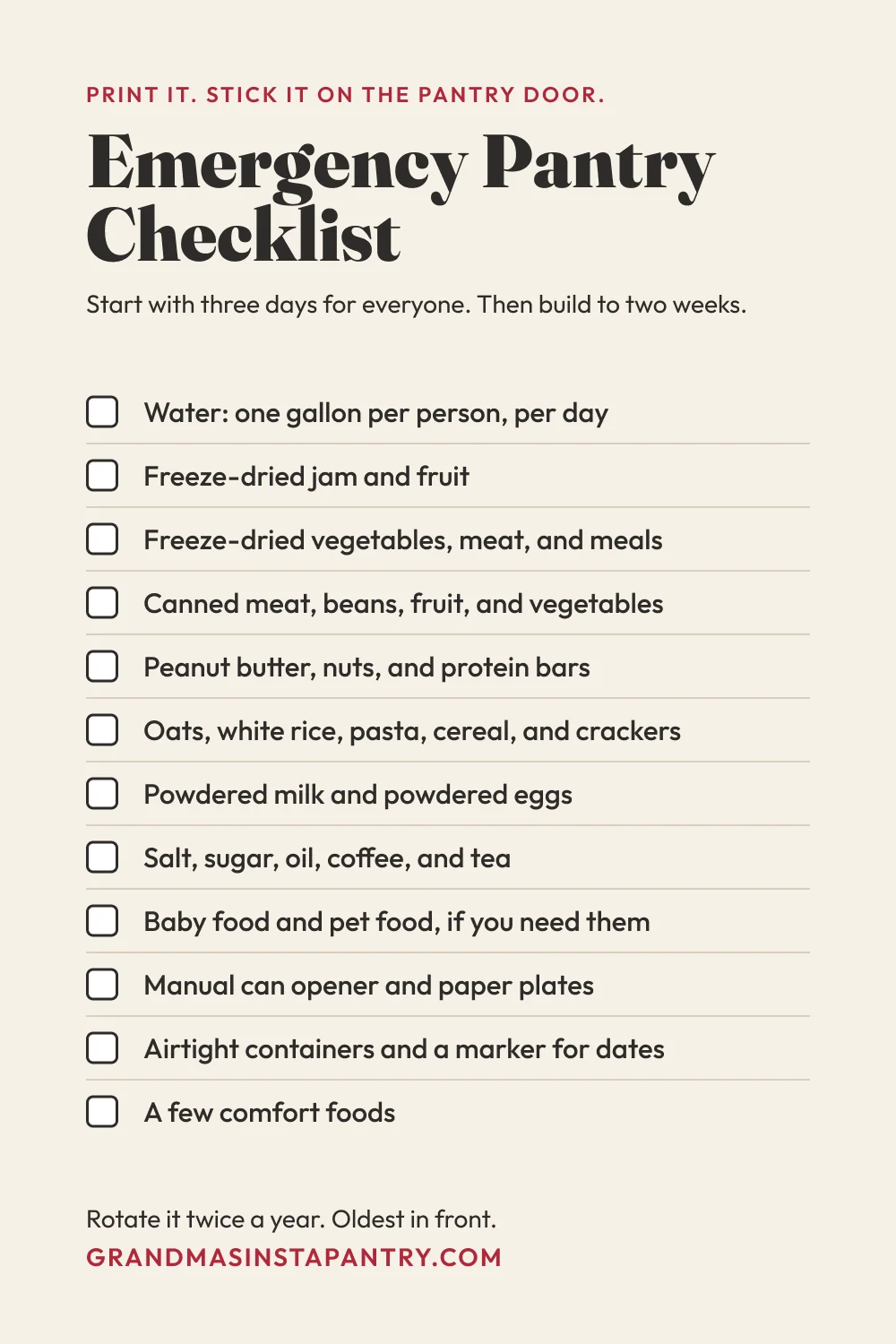
Download the printable checklist (PDF). It's letter size with a white background, so it prints clean on regular paper. Check the boxes as you stock up and stick it on the pantry door.
Add Freeze-dried Jam to your Pantry
One bag keeps up to 25 years with no fridge. Shop all flavors and cross one thing off the list.
Keep reading
Sources
- Ready.gov. Build A Kit.
- Ready.gov. Food.
- American Red Cross. Survival Kit Supplies.
- USDA Food Safety and Inspection Service. Shelf-Stable Food Safety.
- FoodSafety.gov. Avoid Foodborne Illness During Temporary Power Outages.
- Centers for Disease Control and Prevention. Avoiding Carbon Monoxide Poisoning.
Get on Grandma's List
Be the first to hear when a flavor is back in stock, when there's a sale, and when it's a good time to top off your food storage. You'll also get pantry tips and new ways to use your jam. No spam, ever.
Sign up and we'll send you a 10% off coupon as a thank you.