
Freezer Jam vs. Freeze-Dried Jam: What's the Difference?
If you grew up on freezer jam, you know the taste. Bright and fresh, closer to the fruit than the cooked kind from the store. You also know the catch. It has to live in the freezer.
The names sound alike, so it's fair to wonder if freeze-dried jam is the same thing. It isn't. Here's how they compare.
What is freezer jam?
Freezer jam is uncooked jam. You crush ripe fruit, stir in sugar and pectin, and pour it into containers. There's no canning and no water bath. Because the fruit never cooks, it keeps that fresh-picked flavor.
The trade-off is storage. Freezer jam has to stay cold. The National Center for Home Food Preservation says it keeps up to a year in the freezer or up to three weeks in the fridge. Left on the counter, it molds or ferments fast.
What is freeze-dried jam?
Freeze-drying takes the water out of food without cooking it. The food is frozen, then placed under a vacuum. In a vacuum, the ice turns straight into vapor and leaves, skipping the liquid stage. That removes nearly all of the water, which is why freeze-dried food is so light and keeps so long.
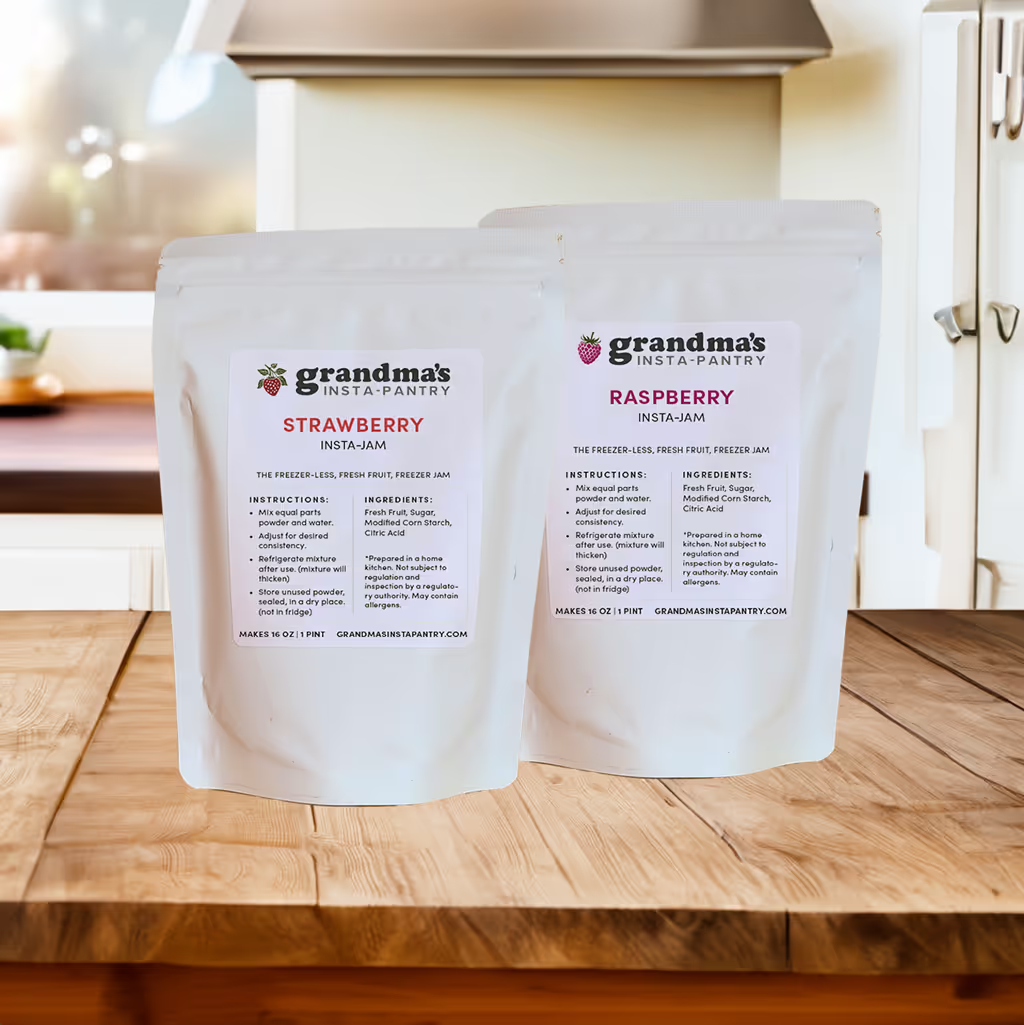
Our jam comes as a powder made with REAL fruit, sugar, modified corn starch, and citric acid. You can get it in Strawberry, Raspberry, Rhubarb, Blackberry, Blueberry, and Plum. A sealed bag keeps up to 25 years on a pantry shelf. No fridge and no freezer. When you want jam, mix equal parts powder and water and stir. It's ready in seconds. Use a little less water if you like it thick.
Once it's mixed, it goes in the fridge and keeps about as long as homemade jam, around a month. That's shorter than store-bought, because it doesn't have the preservatives store-bought jam does. Reseal the bag and the rest of the powder goes back on the shelf.
Side by side
Where it lives
- Freezer jam: the freezer, then the fridge
- Freeze-dried jam: a pantry shelf
How long it keeps
- Freezer jam: up to a year frozen, about three weeks in the fridge
- Freeze-dried jam: up to 25 years in the sealed bag, about a month in the fridge once mixed
How much work it is
- Freezer jam: an afternoon of washing, crushing, and stirring
- Freeze-dried jam: a spoon and some water
Batch size
- Freezer jam: a whole batch at once
- Freeze-dried jam: a spoonful or a bowlful, your call
When the power goes out
- Freezer jam: the USDA says a full freezer holds its temperature for about 48 hours with the door shut. After that, the clock is running.
- Freeze-dried jam: nothing changes.
Does it taste like freezer jam?
Of course it does. It's bright and fresh, and it tastes like the fruit it's made from. It doesn't taste like it came from the store. It reminds us of Grandma's kitchen.
Freeze-drying is a big part of why. It uses cold and a vacuum instead of heat, so the flavor of the fruit stays.
It spreads like freezer jam too. Mix equal parts powder and water and you get a soft, spoonable jam. It thickens a little more in the fridge.
One customer, Sage H., called it "almost addictively delicious."
The best test is a spoonful on toast. Strawberry is a good one to start with.
Which one is right for you?
Make freezer jam if you have a berry patch, a free Saturday, and room in the freezer. It's a great summer project.
Go with freeze-dried if you want jam in your food storage, in the camp box, or in the cupboard for the morning you run out.
Plenty of people keep both.
Not sure which flavor to start with? The Sample Pack is three cups, and you pick the flavors.
Common questions
Does freeze-dried jam need to be refrigerated?
Not until you mix it. Keep the powder sealed in a dry place. Once you add water, keep it in the fridge.
How long does it last?
Up to 25 years in the sealed bag. Once it's mixed, about a month in the fridge.
How do you make it?
Equal parts powder and water. Stir, give it a few seconds, and adjust until it's as thick as you like.
Can you bake with it?
Yes. Start with our jam thumbprint cookies, then try these 10 ways to use freeze-dried jam.
Ready to try it?
Pick a flavor and mix up your first spoonful. Shop all flavors and get a bag on your shelf.
Keep reading
Sources
- National Center for Home Food Preservation. Storing Home-Canned Jams and Jellies.
- Clemson Cooperative Extension, Home & Garden Information Center. Freeze Drying Foods.
- FoodSafety.gov. Avoid Foodborne Illness During Temporary Power Outages.